
This comprehensive guide provides essential information for operating and maintaining your Pelonis air conditioning unit. Accessing the correct owner’s manual ensures proper usage, efficient performance, and safety for your specific appliance model.

Purpose of the Manual
The Pelonis AC owner’s manual is the essential resource designed to ensure safe, efficient, and reliable operation of your air conditioning unit throughout its lifespan. Its primary purpose is to provide clear, concise, step-by-step instructions covering all critical aspects, from initial setup to everyday use. The manual thoroughly details crucial safety information, including electrical warnings and general precautions, protecting both users and the device from potential hazards effectively. It meticulously explains how to navigate the control panel, select various cooling modes, precisely set desired temperatures, and accurately adjust fan speeds for optimal comfort. Furthermore, it outlines proper routine maintenance procedures, such as filter cleaning and exterior care, which are vital for maintaining peak performance, extending the unit’s lifespan, and ensuring superior indoor air quality consistently. Ultimately, it serves as a comprehensive troubleshooting guide, offering practical solutions for common operational issues, empowering users to quickly resolve problems and maximize their appliance’s effectiveness and overall user satisfaction.

Finding Your Specific Model Manual
Locating the precise owner’s manual for your Pelonis air conditioner is paramount for correct usage and effective troubleshooting. To begin, always identify the exact model number of your unit. This vital identifier is typically situated on a product label or sticker, often found on the back, side, or bottom casing of the appliance. Once you have this number, the internet becomes your primary resource. Websites like Yumpu.com and Manuals.plus are excellent repositories for appliance documentation, frequently hosting various Pelonis manuals, including those for specific AC models. Simply perform a search using “Pelonis AC [Your Model Number] manual.” You might also find direct links on support pages or via a general web search. Ensure you download from reputable sources to guarantee authenticity and accuracy. This step is critical whether you own an 8000 BTU portable unit, a window air conditioner, or any other Pelonis model, ensuring you access instructions tailored to your specific device.

General Safety Information
Always prioritize safety when operating any Pelonis AC unit. Read the entire manual carefully before use to understand all warnings and operational guidelines. Keep children and pets away from the appliance.
Important Safety Precautions
To ensure safe operation of your Pelonis air conditioner, always adhere to these critical precautions. Never operate the appliance with a damaged power cord or plug; immediately contact a qualified technician for repair. Place the unit on a firm, level surface to prevent tipping and ensure proper air circulation, avoiding carpets or uneven ground that could obstruct vents. Do not insert fingers or foreign objects into any openings, as this could lead to electric shock or injury. Supervise children closely to prevent them from playing with the appliance. Before performing any cleaning or maintenance, always unplug the air conditioner from the electrical outlet to prevent accidental startup. Avoid using extension cords or adaptors, as these can overheat and pose a fire hazard. Ensure the unit is positioned away from direct sunlight, heat sources, and flammable materials. Proper installation, as outlined in your specific model’s manual (like those for 8000 BTU or 5300 BTU units), is paramount to prevent hazards and ensure optimal performance. Regularly inspect the unit for any signs of damage or wear, ceasing operation if any issues are detected.
Electrical Safety Warnings
Always prioritize electrical safety when operating your Pelonis air conditioner. Ensure the power cord and plug are in perfect condition; any fraying, cuts, or damage necessitates immediate disconnection and professional repair. Never attempt to modify the plug or use it with a non-grounded outlet, as this poses a severe risk of electric shock. Your AC unit, whether a portable 8000 BTU or a window model, requires a dedicated, properly grounded electrical circuit to prevent overloading. Avoid sharing the outlet with other high-power appliances. Under no circumstances should you use an extension cord or a multi-outlet power strip with your air conditioner, as these can easily overheat and cause a fire. If the appliance malfunctions or emits unusual smells, immediately unplug it. Always handle the power cord by the plug, not by pulling the cord itself, to prevent internal wiring damage. Keep the area around the plug and outlet dry and free from obstructions.
Pelonis Air Conditioner Models and Types
Pelonis offers diverse air conditioner models, including popular portable units like the 8000 BTU, efficient window ACs, and various BTU ratings such as the 5300 BTU, tailored for different cooling needs.
Portable Air Conditioners (e.g., 8000 BTU)
Pelonis offers versatile portable air conditioners, exemplified by the 8000 BTU model, ideal for cooling medium-sized rooms such as bedrooms or home offices. These units excel in mobility, featuring wheels and user-friendly window kits for simple exhaust setup, making them perfect for dynamic cooling needs without permanent installation.
Your Pelonis portable AC manual is crucial for optimal setup and operation. It details installing the window kit for efficient exhaust and guides you through the control panel’s various functions. Learn to select cooling modes, adjust temperature, and manage fan speeds effectively. The manual also covers essential maintenance like filter cleaning and condensate drainage, ensuring your 8000 BTU unit performs reliably. Following these instructions extends the appliance’s lifespan and maintains peak performance.
Window Air Conditioners
Pelonis window air conditioners provide effective and space-saving cooling solutions for homes and apartments. Designed for installation directly into a window frame, these units offer a more permanent cooling setup compared to portable models, delivering consistent comfort throughout the summer months. Their integrated design often means a quieter operation indoors, with the noisier components situated outside the living space.
The manual for your Pelonis window AC is indispensable for safe and correct installation. It provides step-by-step instructions for securely mounting the unit, sealing gaps to prevent air leakage, and ensuring proper drainage. Furthermore, the manual guides you through using the control panel, understanding different cooling settings, and maximizing energy efficiency. Regular maintenance, such as cleaning the air filter and checking the condenser coils, is also detailed, helping to prolong the unit’s life and ensure efficient operation.
Understanding BTU Ratings (e;g., 5300 BTU)

BTU, or British Thermal Unit, is a fundamental measurement of an air conditioner’s cooling power. It quantifies the amount of heat an AC unit can remove from a room per hour. A higher BTU rating indicates a more powerful unit capable of cooling larger spaces more effectively. Conversely, a lower BTU unit is suitable for smaller rooms, preventing overcooling and unnecessary energy consumption. For instance, a Pelonis air conditioner with a 5300 BTU rating, as seen in some models, is typically well-suited for cooling a medium-sized room, often ranging from 150 to 250 square feet. It’s crucial to match the AC’s BTU rating to your room’s dimensions to achieve optimal comfort and efficiency. An undersized unit will struggle to cool the space, while an oversized one will cycle on and off too frequently, leading to higher humidity and wasted energy. Your Pelonis AC manual provides specific recommendations for room size based on the unit’s BTU capacity, ensuring you select the perfect model for your environment.

Operation Guide
This section details how to effectively operate your Pelonis air conditioner. Learn about the control panel, basic cooling, temperature settings, and advanced features to ensure optimal comfort and efficient use of your appliance.
Control Panel Overview
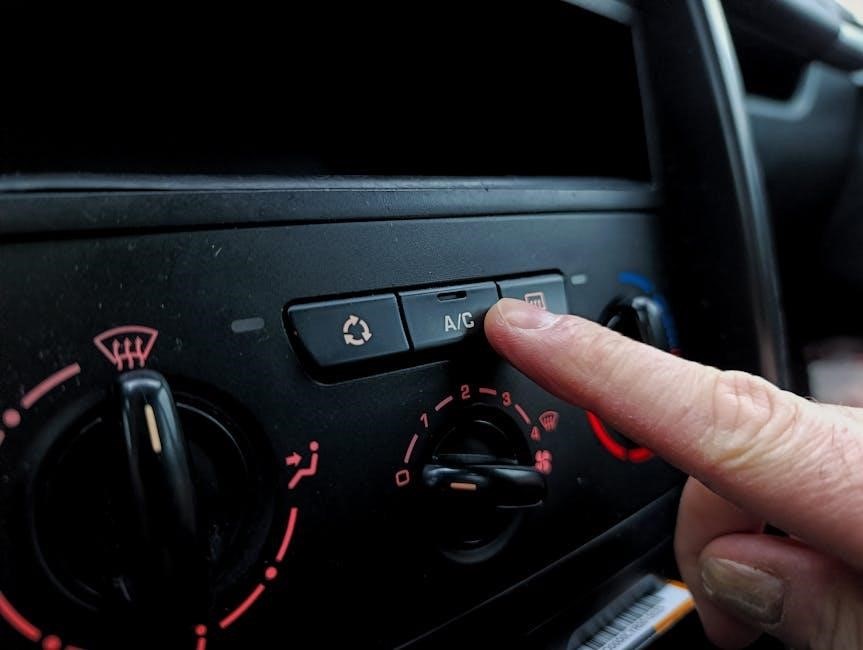
The control panel is the central interface for managing your Pelonis air conditioner. Found on the unit’s front or top, it provides access to all operational settings. A clear digital display typically shows the current temperature or chosen mode. Essential buttons include the Power button for switching the unit on or off, and a Mode button to toggle between cooling, fan-only, and dehumidifying functions. Dedicated Temperature Up/Down arrows allow precise adjustment of your desired room temperature. A Fan Speed button lets you select between various airflow levels (low, medium, high) to customize cooling intensity. Many Pelonis models also integrate a Timer button for scheduling automatic power cycles and a Sleep function for optimized nighttime comfort and energy saving. For an accurate depiction and detailed instructions on specific buttons and indicator lights, always consult the owner’s manual for your particular Pelonis AC model, whether it’s an 8000 BTU portable unit or a 5300 BTU window AC, as features vary.
Basic Cooling Mode Operation
To initiate basic cooling with your Pelonis air conditioner, first ensure the unit is properly plugged into a suitable electrical outlet, adhering to all electrical safety warnings. Press the Power button on the control panel or remote control to switch the appliance on. Once powered, navigate through the modes using the Mode button until the ‘Cool’ icon or indicator light is illuminated, signifying active cooling operation. Next, use the Temperature Up/Down arrows to set your desired temperature. A comfortable range for most users is typically between 68°F and 78°F (20°C and 26°C) for optimal efficiency. The unit will then work to achieve and maintain this set temperature by circulating refrigerated air. You can also adjust the airflow intensity by pressing the Fan Speed button, choosing between low, medium, or high settings, depending on your comfort preference and the room’s specific cooling needs. Some Pelonis models, like 8000 BTU portable or 5300 BTU window units, may offer an ‘Auto’ fan speed, intelligently adjusting based on room temperature to save energy.
Setting Temperature and Fan Speed

Once your Pelonis air conditioner is in cooling mode, precise temperature and fan speed adjustments are key for personalized comfort. To set the desired temperature, locate the Temperature Up (+) and Temperature Down (-) buttons on the control panel or remote. Each press will typically adjust the temperature by one degree Fahrenheit or Celsius. Aim for an energy-efficient yet comfortable range, generally between 68°F (20°C) and 78°F (26°C), depending on your preference and external conditions. The display will show your selected temperature. For fan speed control, find the Fan Speed button. Pressing this button cycles through available settings: Low, Medium, High, and sometimes an Auto mode. Low speed provides quieter operation and gentler airflow, ideal for sleeping or maintaining a steady temperature. High speed delivers maximum cooling power, quickly reducing room temperature. Auto mode intelligently adjusts fan speed based on the ambient temperature, optimizing comfort and energy consumption for models like the Pelonis portable 8000 BTU or window 5300 BTU units.
Timer and Sleep Functions
Your air conditioner’s timer and sleep functions offer significant convenience and energy savings. The Timer function enables you to program the unit to automatically power on or off after a set period, typically from 1 to 24 hours; To set, press the ‘Timer’ button, then use the temperature adjustment controls to select the desired delay. Confirm your choice by pressing ‘Timer’ once more. This feature is perfect for pre-cooling your space before arrival or ensuring the unit switches off after you’ve fallen asleep, thereby optimizing energy consumption.
The Sleep function is tailored for nighttime comfort and efficiency. Upon activation, the unit subtly raises the set temperature by a few degrees over several hours, preventing excessive cooling and fostering a restful environment. It also typically reduces the fan speed to its quietest setting. Engage this feature by pressing the ‘Sleep’ button on your control panel or remote. Both functions are instrumental in managing your energy footprint while ensuring a pleasant indoor climate.

Maintenance and Cleaning
Maintaining your Pelonis AC regularly ensures peak performance and extends its lifespan. This section details crucial cleaning procedures, including air filter care and exterior upkeep, vital for efficient operation and hygiene.
Filter Cleaning
Regular filter cleaning is vital for your Pelonis air conditioner’s optimal performance and indoor air quality. Your specific owner’s manual, often found on Yumpu.com or Manuals.plus for various models (e.g., 5300 BTU, 8000 BTU portable units), provides detailed instructions. Typically, access the filter by carefully removing the front panel or grille. Clean the filter approximately every two weeks, or more frequently with heavy use or in dusty conditions, to prevent diminished airflow and efficiency.
For cleaning, first vacuum loose dust and debris. For a deeper clean, wash the filter gently under lukewarm running water until all dirt is rinsed away. Avoid harsh detergents or abrasive brushes, which could damage the material. After washing, allow the filter to air dry completely before reinserting. Reinstalling a damp filter can foster mold growth and reduce cooling effectiveness. Always consult your Pelonis AC manual for model-specific filter maintenance and replacement schedules.
Exterior Cleaning
Maintaining the exterior of your Pelonis air conditioner is crucial for its longevity and aesthetic appeal. Before any cleaning, always ensure the unit is unplugged from the power source to prevent electrical hazards. Use a soft, damp cloth to gently wipe down the outer casing, effectively removing dust, dirt, and fingerprints. For stubborn marks, a mild soap solution can be sparingly applied to the cloth, but explicitly avoid spraying water directly onto the unit to prevent damage to internal electrical components. Pay careful attention to vents and grilles, utilizing a soft brush or a vacuum cleaner’s brush attachment to clear any accumulated debris that might obstruct crucial airflow. Regular exterior cleaning, perhaps monthly or seasonally, helps prevent grime buildup and keeps your Pelonis AC looking new and operating efficiently. Never use abrasive cleaners, harsh solvents, or waxing agents, as these can severely damage the plastic finish or paint. Always refer to your specific Pelonis owner’s manual for any particular cleaning recommendations unique to your model.

Troubleshooting Common Issues
This section guides you through common problems with Pelonis AC units; Learn to identify and resolve issues such as power failure, inefficient cooling, or unusual noises for optimal performance.
Power and Startup Problems
If your Pelonis air conditioner fails to power on or start up correctly, begin by checking the most fundamental elements. Ensure the unit is securely plugged into a functional electrical outlet. Verify that the circuit breaker for that outlet has not tripped; resetting it might resolve the issue. Often, a lack of power stems from a simple disconnection or an overloaded circuit; For portable models, confirm that the water collection tank is not full, as many units have an automatic shut-off feature to prevent overflow, which can impede startup. Check the remote control batteries if you are using one, as a dead battery can lead to perceived power issues. If the unit powers on briefly then immediately shuts down, it could indicate an internal sensor malfunction or an issue with voltage supply. Consult your specific Pelonis AC manual for diagnostic codes or further troubleshooting steps related to startup sequences; If these basic checks do not resolve the problem, professional assistance may be required to diagnose potential internal electrical faults or component failures, ensuring safe and correct operation of your appliance. Always prioritize safety during electrical checks.
Cooling Inefficiency
If your Pelonis air conditioner isn’t cooling effectively, several factors could be at play. Initially, verify that the air filter is clean; a clogged filter severely restricts airflow, drastically reducing cooling capacity, especially for units like the 5300 BTU models. Proper filter maintenance is crucial, as detailed in your manual’s ‘Filter Cleaning’ section. For portable ACs, ensure the exhaust hose is correctly installed and free from blockages, efficiently expelling hot air outside. Recirculation of hot air prevents effective cooling. Confirm that all windows and doors in the area are closed to prevent warm air intrusion. The unit’s BTU rating, such as an 8000 BTU portable conditioner, must match the room size for optimal performance; Double-check that the temperature setting is appropriately low. High ambient temperatures or direct sunlight can also hinder the unit’s cooling ability. If these basic troubleshooting steps do not resolve the issue, a refrigerant leak or a more involved mechanical problem may exist, necessitating professional assessment as outlined in your Pelonis AC manual.
Unusual Noises or Odors
Encountering unusual noises or odors from your Pelonis air conditioner can signal a variety of issues that require attention. A rattling or vibrating sound often points to loose components, such as a panel or a fan blade hitting an obstruction. Ensure the unit is placed on a stable, level surface. A persistent buzzing might indicate an electrical problem or a failing motor, which warrants immediate investigation. Gurgling sounds are typically related to refrigerant flow or condensation drainage; check if the unit is tilted, affecting proper water removal.
Regarding odors, a musty smell frequently suggests mold or mildew growth within the unit, particularly on the evaporator coil or in the drain pan. Regular filter cleaning and ensuring proper drainage can prevent this. A burning plastic or electrical smell, however, is a serious warning sign of overheating components or wiring issues. In such cases, immediately unplug the appliance to prevent further damage or fire hazards; Always refer to your Pelonis AC manual for specific troubleshooting steps for your model, and contact a qualified technician if the problem persists or if you suspect an electrical fault.